Why Riverside Trees in Guelph Need a Different Approach
Trees growing along the Speed River and the Eramosa River face conditions that upland trees never encounter. Their root systems sit in deep, moisture-rich alluvial soil, and their lower trunks are periodically submerged during spring freshets and after heavy summer storms. This constant access to water produces fast growth, but it also creates wood that is softer, heavier and more prone to internal decay than the timber of a sugar maple on a dry ridge. For homeowners in Guelph, understanding these differences is the first step toward responsible Tree Pruning.
The floodplain corridor also carries a dense population of willow and silver maple, two species that respond to pruning in very specific ways. Willows compartmentalize wounds poorly and are famous for sending out vigorous epicormic shoots after a hard cut. Silver maples develop wide, shallow root plates and brittle limb unions that fail under ice and wind loads. A crew that treats a riverside silver maple like a backyard spruce will leave the tree more dangerous than it found it. That is why our ISA Certified Arborists assess species, soil moisture, lean and target exposure before any saw is started.
Willow Tree Trimming in Guelph: Managing Vigour Near the Water
Willow tree trimming in Guelph is rarely a simple cosmetic job. These trees are built to regenerate, and a poorly timed or overly aggressive cut can trigger a flush of water sprouts that shades out the interior canopy within two seasons. Our approach is to remove only what the tree can compartmentalize in a single growing cycle, focusing on deadwood, crossing limbs and any branch that overhangs a roof, a fence line or a neighbouring property. Where a willow has been pollarded in the past, we maintain that cycle rather than abandoning it, because an unmanaged pollard head becomes a decay pocket.
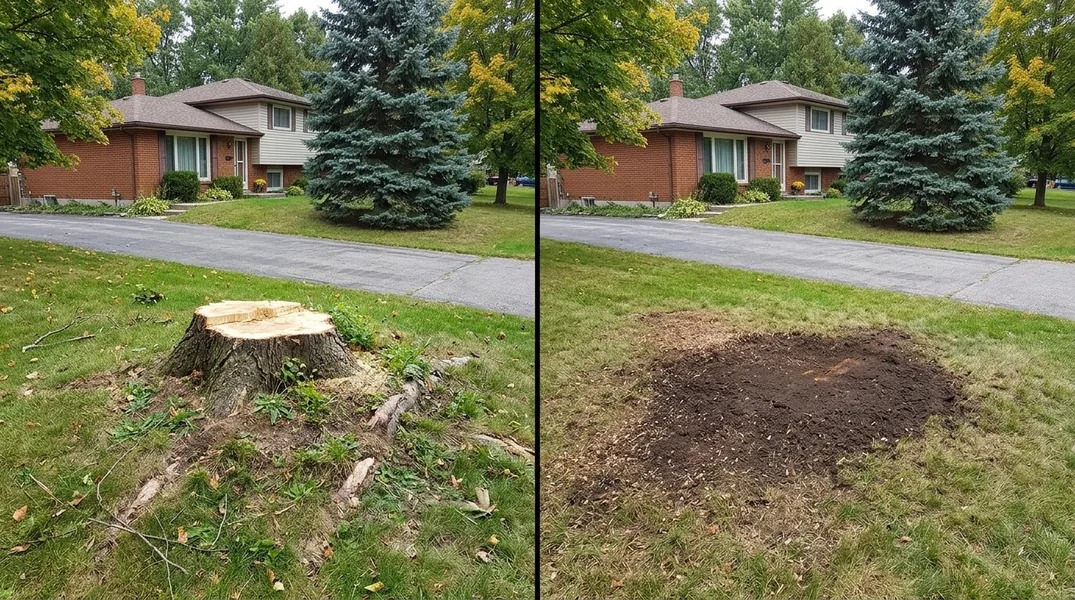
Riverside willows also present access challenges. Saturated ground limits where a truck or chipper can safely park, and the canopy often leans out over flowing water. Our crews use rigging lines and controlled lowering to keep every cut section out of the riverbed, and we chip or haul all material the same day. If a willow is beyond saving because of root failure or extensive heart rot, we handle Tree Removal with the same care, including a full cleanup and Stump Grinding so the bank can be replanted. Homeowners near West Willow Woods (Guelph) often call us precisely because their mature willows have outgrown the space between the house and the water.
Silver Maple Pruning and the Floodplain Canopy
Silver maple pruning is one of the most consequential services we provide in the river corridor. These trees grow quickly, and a silver maple that looked manageable at fifteen metres can reach twenty-five metres with a spread that dwarfs the lot. The species is prone to included bark, where two codominant stems grow so tightly that the connection is structurally weak. Over time, ice loading or a summer windstorm can split that union cleanly. Our pruning program targets those weak forks early, using reduction cuts and, where appropriate, tree cabling and bracing to support a stem that cannot be removed without destroying the canopy shape.
Floodplain trees also carry a higher risk of root plate instability. When the Speed or Eramosa saturates the soil for weeks, the anchorage that holds a large maple upright is measurably weaker. We inspect for soil heave, fungal fruiting bodies at the base and a lean that has changed since the last visit. Residents in Parkwood Gardens (Guelph) and along the Eramosa corridor should schedule an assessment after any major flood event, even if the tree looks fine from the kitchen window. A free estimate can confirm whether the tree needs pruning, cabling or removal, and our rates are quoted in writing before work begins.
Permits, the City of Guelph and Riverside Protection
Riverside properties sit under overlapping layers of regulation. The City of Guelph may require a permit for a private tree removal, and an arborist report is often part of that application. Properties close to the water can also fall within a regulated area where the local conservation authority reviews work near the shoreline. We do not guess at thresholds or fees, and we do not quote figures we have not verified. What we do is prepare a clear arborist report describing species, size, condition and the reason for the proposed work, so the application moves through review without avoidable delays. You can confirm current requirements directly with the City of Guelph before scheduling.
This documentation matters most when a tree is dead, hazardous or storm damaged. Emergency work still needs to be safe and defensible, and photographs, measurements and a written assessment protect the homeowner if a neighbour or the municipality asks questions later. If a limb has already failed, we document the damage for your insurer and remove the hazard the same day where scheduling allows. Call (226) 829-5459 to discuss a riverside assessment, or request a free estimate online.
Tree Trimming Near River Banks: Protecting the Soil and the Water
Tree trimming near a river is as much about what happens on the ground as what happens in the canopy. Heavy equipment compacts saturated soil, and compacted soil around a floodplain tree can kill fine roots within a single season. Our crews use mats and light footprint equipment where ground conditions demand it, and we avoid working on days when the bank is soft enough to rut. All brush is chipped on site or removed, and nothing is left to wash into the river during the next high-water event. This is standard practice for us, not an upsell.
The trees themselves are part of the bank's defence. Roots hold the soil, shade keeps water temperatures down, and leaf litter feeds the aquatic food web. That is why we favour selective Tree Trimming over blanket clearing on riverside lots. When a homeowner in Onward Willow (Guelph) asks us to open a view of the water, we look for a way to do it through crown thinning and targeted removals rather than a wholesale cut. The result is a healthier bank, a safer property and a canopy that keeps working for the river.
Seasonal Timing for Floodplain Trees in Guelph
Timing changes the outcome on riverside trees. Willows and silver maples are best pruned in late winter, before bud break and before the spring freshet softens the ground. Dormant pruning produces a cleaner wound response and avoids the sap bleeding that willows show when cut in active growth. Structural work on large maples is also easier when the canopy is bare and the arborist can see every union. Summer pruning is reserved for deadwood removal, clearance over a roof or driveway, and hazard reduction after a storm.
Fall is a reasonable window for light work, but we avoid heavy cuts on floodplain trees in October and November, when the tree is allocating resources to root storage and wound closure slows. If you are unsure whether your tree is due, a free estimate is the simplest way to settle it. Our crews serve Guelph and the surrounding municipalities, are fully insured, and work to ISA standards on every property. Contact Guelph Tree Trimming Co. at (226) 829-5459 to book a riverside assessment this season.
Looking for a professional in Guelph? Guelph Tree Trimming Co. responds quickly for all your tree trimming needs.
Get a free estimateOur services : Tree Trimming · Tree Removal · Stump Grinding